

What Is Agentic AI, and Why It’s Different From the AI You Already Know
If you’ve used ChatGPT, Copilot, or any AI assistant in the past couple of years, you already know what regular AI does: it answers questions. You type something, it responds. You ask again, it responds again. Always waiting. Always reactive.
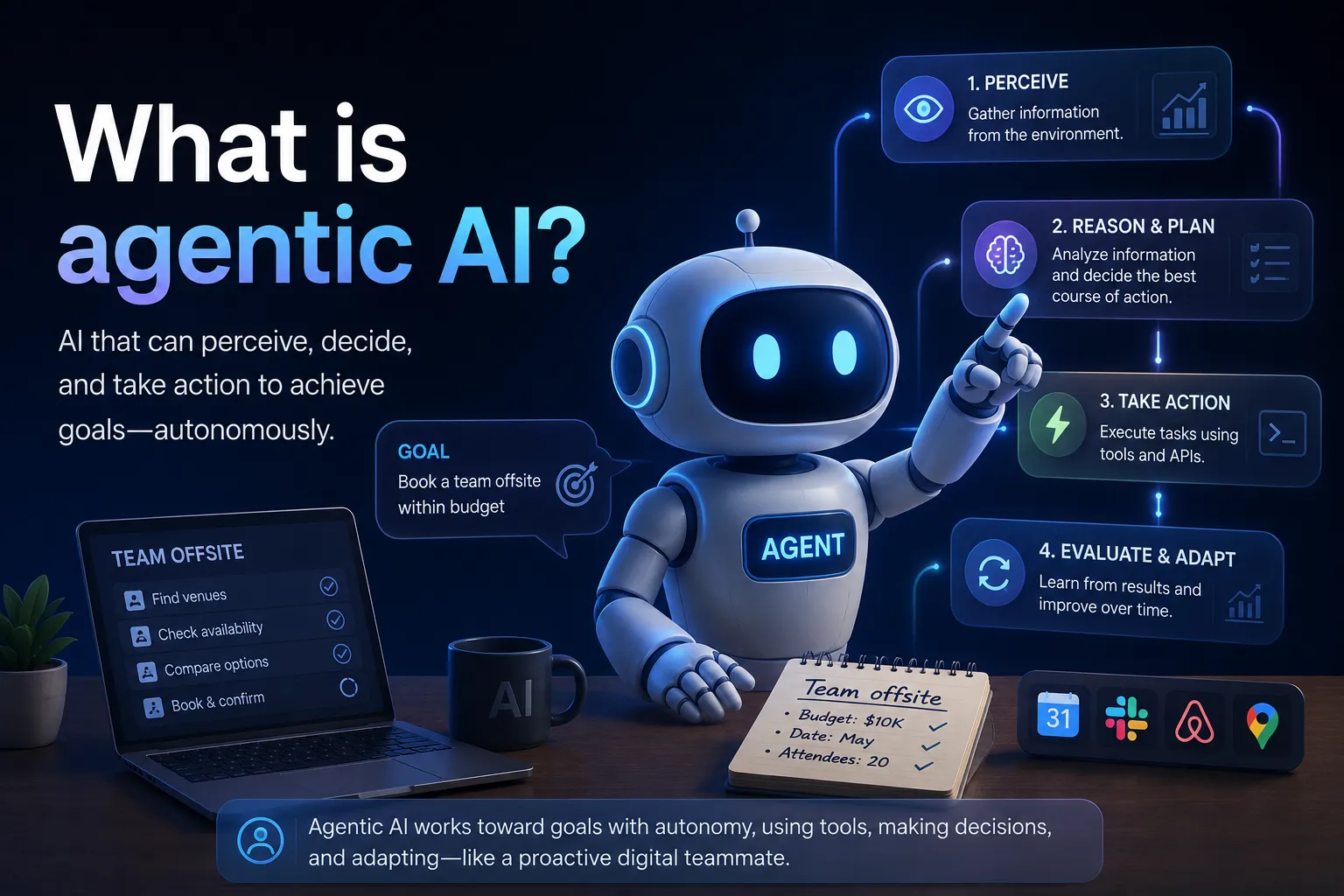
Agentic AI is a different thing. It doesn’t wait to be asked. It works through a goal, step by step, on its own.
From answering to doing
Here’s a comparison that might help.
A knowledgeable colleague can tell you how to file an expense report. They’ll walk you through every step. That’s useful. But you’re still the one doing it.
A capable employee just handles it. They open the system, fill out the form, attach the receipts, submit it, and ping you when it’s done. They took the goal and ran with it.
That’s the gap between a chatbot and an agentic AI system. One explains. The other acts.
What’s actually going on under the hood
An agentic system has a few parts that work together:
A reasoning engine. At the center is a large language model, the same kind of technology that powers chatbots. But here, it’s not just responding to a single prompt. It’s looping: what’s the goal, what have I done, what should I do next. That cycle of plan, act, observe, adjust is what makes it an agent rather than a chatbot.
Tools. The model on its own can only generate text. To actually do things, it needs tools it can call on: a web browser, a code runner, a calendar API, a database query, an email client. The agent decides which tool to use and when. The human doesn’t have to specify each step.
Memory. Agentic systems need to hold context across steps. What did I learn from that search? What did the user say three steps ago? Some agents store this in short-term context; others write to longer-term memory between sessions. Either way, it’s what lets them stay on track through a long task rather than forgetting where they were.
A goal, not a prompt. You don’t tell an agent exactly what to do. You tell it what you want accomplished, and it figures out the steps. “Summarize last month’s customer support tickets and flag anything that seems like a recurring bug” is the kind of instruction an agent can work with.
A concrete example
Say you ask an agentic AI system to research competitors and prepare a briefing.
A regular chatbot might write you a paragraph about what it already knows, which could be out of date, or missing whoever launched last month.
An agent would:
- Search the web for recent news on your competitors
- Pull product pages and pricing
- Check recent reviews or forum discussions
- Synthesize everything into a structured briefing
- Drop it in a document and notify you
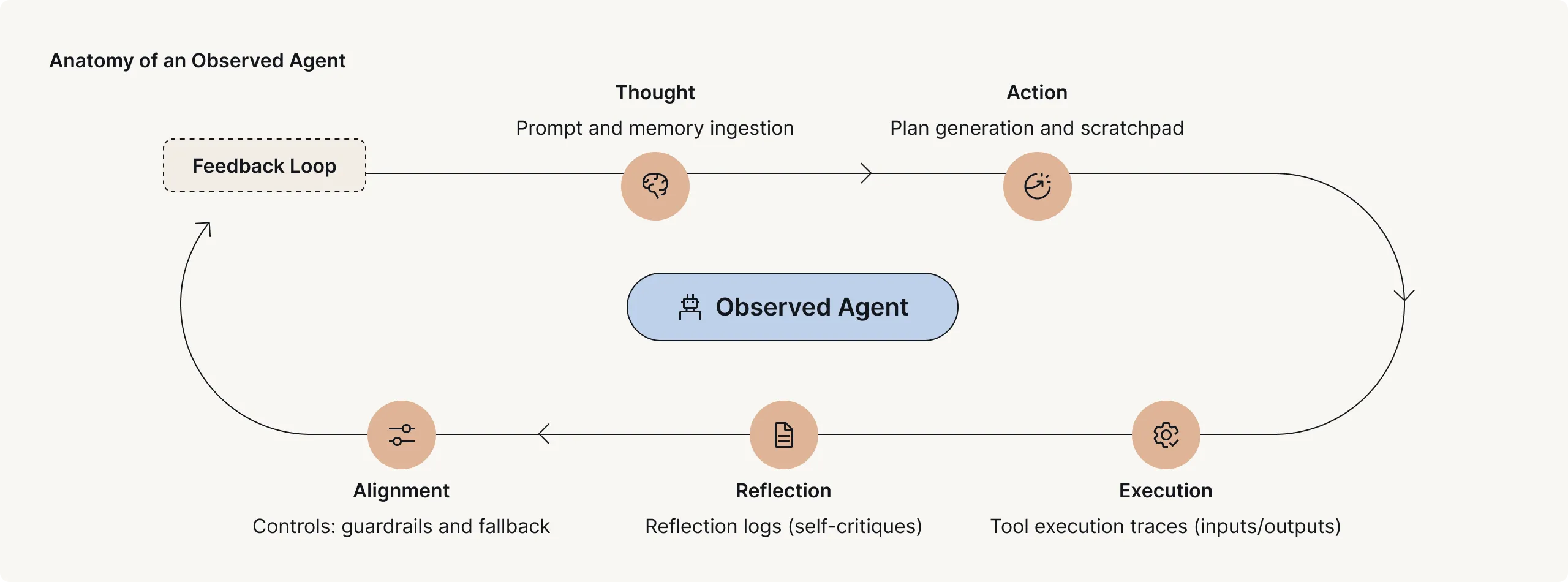 You gave it one instruction. It ran ten steps. You didn’t have to manage any of them.
That’s not magic. It’s just the model making decisions about what to do next, using tools to carry those decisions out, and keeping track of where it is in the process.
Where it gets complicated
This is the part most introductions skip, so I’ll say it plainly: agentic AI is genuinely harder to trust than a chatbot.
When a chatbot gives you a bad answer, you read it, notice it’s wrong, and move on. When an agent does something wrong mid-task, it might be three steps deep before anyone notices, and by then it may have sent an email, edited a file, or made an API call you can’t take back.
This is why the field talks a lot about “human in the loop”: checkpoints where the agent pauses and asks for confirmation before doing something consequential. It’s also why designing these systems well is a real skill. You’re not just writing a prompt; you’re defining what the agent can touch, what it should confirm before doing, and what to do when something unexpected happens.
Why it matters now
Agentic AI isn’t brand new as a concept, but it’s become practical fast. Better models, cheaper compute, and mature tooling (like Microsoft’s Copilot Studio or AutoGen framework) have made it possible to build real agentic workflows without a research team.
Businesses are already using agents to handle parts of customer support, internal IT requests, data pipeline maintenance, and document processing. Tasks that used to require a person to monitor a queue and click through steps. That’s not going away.
If you work in any kind of knowledge work, understanding how these systems operate (not just that they exist) is going to matter. You don’t need to build them. But knowing what they can and can’t reliably do, and where a human still needs to be in the loop, is increasingly useful to have.
If you work in any kind of knowledge work, understanding how these systems operate — not just that they exist — is going to matter. You don’t need to build them. But knowing what they can and can’t reliably do, and where a human still needs to be in the loop, is increasingly useful to have.